Online Privacy in Thailand: Staying Secure and Connected
From the Computer Crime Act to public Wi-Fi risks in Bangkok cafes, here's a practical look at digital privacy in Thailand and how a VPN helps.
Thailand's internet is largely open compared to some of its neighbors, but it isn't without friction. Between periodic site blocks, the wide reach of the Computer Crime Act, and the everyday risks of public Wi-Fi in tourist-heavy areas, staying private online takes a bit more thought than most users realize.
What Thai Users May Find Restricted
Thailand's Ministry of Digital Economy and Society (MDES), working with the NBTC and court orders, has for years directed ISPs to block content deemed to violate the Computer Crime Act or lese-majeste rules. This has historically included certain news pages, forums, gambling and adult sites, and occasional social media posts. Access can be uneven — a page may load on one ISP and fail on another, or work fine on mobile data but not on hotel Wi-Fi. Some global services like Pornhub have been officially blocked for years, and streaming catalogs on Netflix, Prime Video, and YouTube differ significantly from what's available in the US, UK, or Japan.
Public Wi-Fi Risks Across Bangkok and Beyond
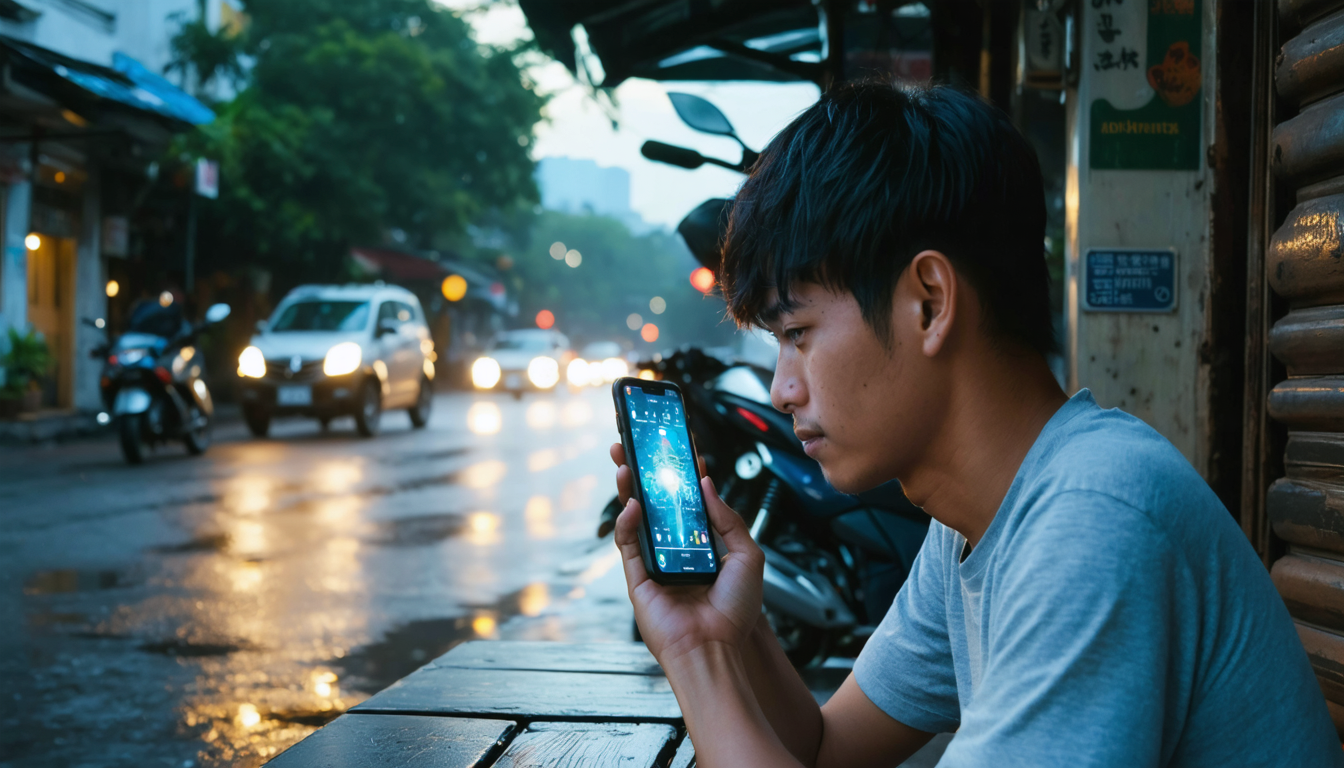
Thailand runs on public Wi-Fi. Cafes in Sukhumvit, coworking spaces in Chiang Mai, airport lounges, malls, and hotels all offer free connections — and most are unencrypted or use a single shared password. On those networks, anyone on the same access point can potentially snoop on unencrypted traffic, and rogue hotspots impersonating a legitimate SSID are a well-documented risk in tourist zones. HTTPS helps, but DNS lookups, connection metadata, and older apps can still leak information about what you're doing.
Why the Computer Crime Act Matters for Everyday Users
The Computer Crime Act is broad. It covers not just hacking but also posting or sharing content the authorities consider false, defamatory, or a threat to national security. In practice, this pushes many Thai users toward more careful online habits — using messaging apps with end-to-end encryption, being mindful of what's shared publicly, and keeping browsing history from being harvested by every network and ad tracker in the chain. Privacy here isn't about hiding wrongdoing; it's about not handing your personal data to networks and third parties that never needed it in the first place.
How a VPN Helps
A VPN wraps your traffic in an encrypted tunnel between your phone and a server elsewhere. On sketchy cafe or airport Wi-Fi, that means the network operator sees only encrypted data, not the sites you visit or the logins you send. It also lets you reach global versions of services — foreign news, full streaming catalogs, or a home-country banking app while traveling — without depending on the local route.
Doft VPN is built for exactly this. Every server location is free, so you can pick Japan, Singapore, Germany, or the US without a paywall — premium adds up to 10x speed and raises the data allowance. It uses modern VLESS + Reality encryption, which looks like ordinary HTTPS traffic and quietly slips past deep packet inspection. There are no activity logs, and it connects in one tap.
Takeaway
Thailand's online space is workable, but it rewards users who take privacy into their own hands — especially on public networks. A trustworthy VPN is one of the simplest upgrades you can make. If you want free access to every server, stealth encryption, and a no-logs policy in a single tap, give Doft VPN a try.
Source: news.google.com
Blocked where you are?
Doft VPN is free and opens access in one tap.