
Banking on the Commute: What Station Wi-Fi Keeps
E-wallets, transfers and work email on a station or warung network. HTTPS protects the contents; the record of where you went is a different question. Here is what encryption fixes and what it leaves alone.
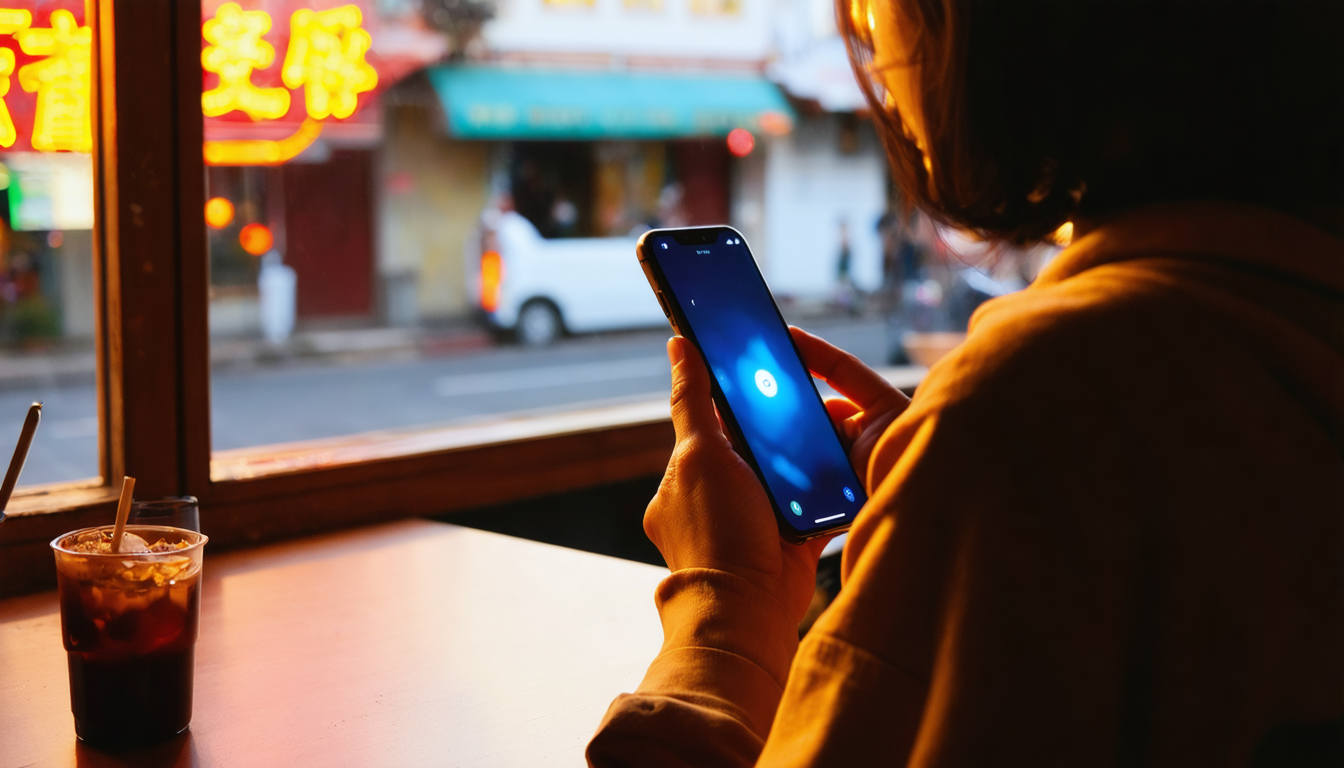
A lot of Indonesian daily life now happens on someone else's network in the fifteen minutes between things. Topping up an e-wallet at a KRL platform. Approving a transfer at a warung kopi. Reading work email in a queue at a station. The connection is free and the transaction takes a moment, which is exactly why nobody thinks about the network carrying it.
What the Network Actually Records
Joining public Wi-Fi puts your phone on a shared local segment. Anything not encrypted end to end can be seen by the other devices on it and by whoever runs the access point.
The good news is that HTTPS now covers the parts that would hurt most. The amount you transferred, your PIN, the body of your email: those are encrypted between your phone and the service, and the network cannot read them.
The part that stays visible is the itinerary. Every site your phone looks up is visible by name, along with how much data was exchanged and when. Ten minutes on a station network produces a small, accurate receipt of your morning: this bank, that lender, this employer's mail server, that health app. It is worth taking seriously precisely because it is boring and continuous — nobody has to attack anything to collect it.
What Encryption Fixes
A VPN wraps the lot in a single encrypted tunnel to a server you choose. The station's access point and everyone else on it see one encrypted connection to one address. The names, the sizes and the timing become unavailable to them.
And what it does not fix, said plainly:
- It protects traffic in transit. It does not clean up a phone that already has something on it, and it will not stop a convincing fake page from collecting your password.
- It does not make you anonymous. The trust moves rather than disappearing: the network operator drops out, the VPN operator steps in, and their handling of your traffic becomes what matters. Check the no-logs claim, and prefer one that can be checked.
- It does not change what is permitted. Indonesia's providers apply category-level filtering under the publicly documented Internet Positif programme; that is a policy question, and encryption is not an answer to it.
The Practical Version
Turn it on before the transfer, not after. It costs one tap and it removes an audience you never chose. If you are only going to use a VPN in one situation, this is the situation — a shared network, a financial app, and no idea who else is on the same access point.
Doft VPN
Doft VPN gives you every server location free, with no paywalled regions. It uses modern cryptography and holds its connection through the sort of handovers a commute produces, moving between station Wi-Fi and mobile data. It keeps no logs of your activity and connects in one tap on Android and iOS. Premium adds higher speeds and raises the data allowance — the privacy features are free, because a security tool that only protects people who pay is not much of a security tool.
Source: news.google.com
Blocked where you are?
Doft VPN is free and opens access in one tap.